


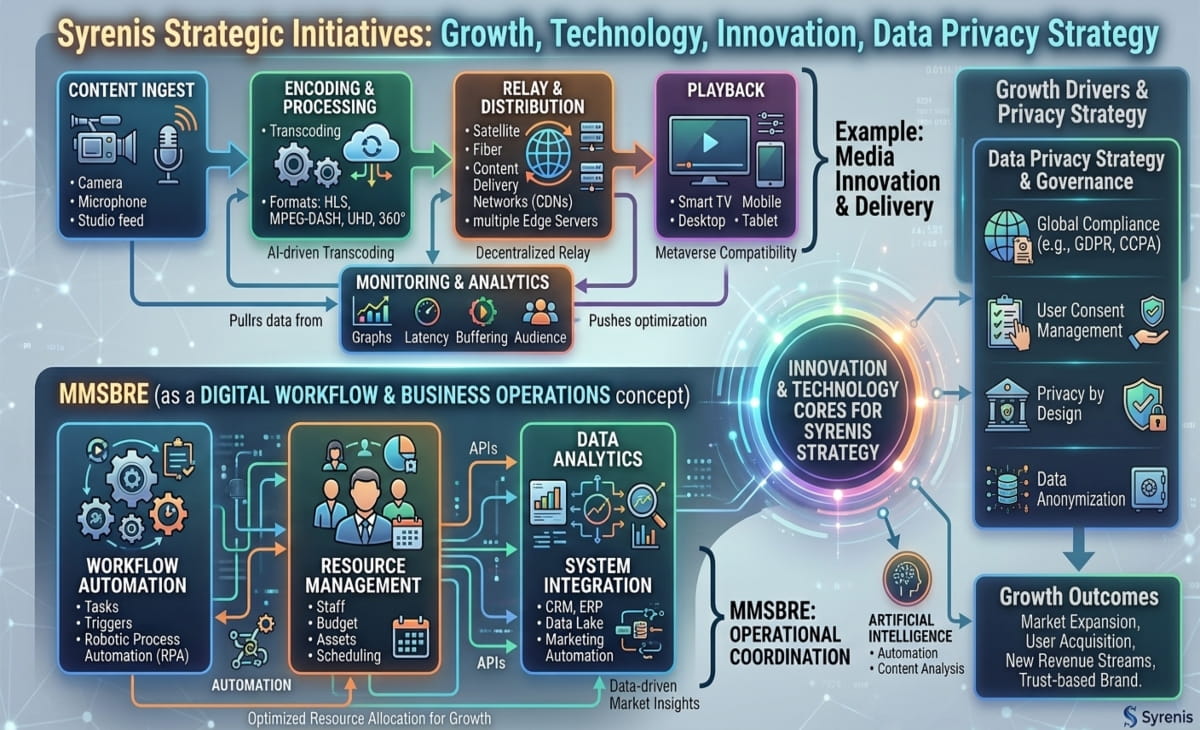
Data privacy has become an important part of modern business. Companies must manage customer information responsibly while meeting regulatory requirements, improving communication, and adopting new technologies. As organizations collect data across multiple channels, keeping customer preferences consistent has become increasingly challenging.
Syrenis Strategic Initiatives address these challenges through a combination of business expansion, product development, enterprise partnerships, and privacy technology. The company’s approach focuses on helping organizations manage customer consent and preferences while making better use of trusted data.
Rather than treating privacy as a legal responsibility alone, Syrenis aims to make consent management part of everyday business operations. Its initiatives also reflect the growing importance of artificial intelligence, international expansion, and connected digital systems.
This article explores Syrenis Strategic Initiatives, including the company’s growth plans, enterprise strategy, partnerships, technology, and future direction.
What Are Syrenis Strategic Initiatives?
Syrenis Strategic Initiatives refer to the company’s plans for business growth, technological development, and strategic partnerships. These initiatives focus on expanding its international presence, strengthening enterprise sales, improving its consent management platform, and addressing emerging requirements such as AI governance.
Syrenis provides consent and preference management technology designed to help organizations collect, manage, and respect customer choices across different systems and communication channels.
Its platform aims to create a centralized record of customer consent. This allows businesses to manage preferences consistently and helps teams understand whether particular uses of customer data are permitted.
The company’s strategy brings together several important areas:
- International expansion and market development
- Enterprise sales and commercial leadership
- Strategic partnerships and consulting services
- Artificial intelligence governance
- Integration with business technology
- Improved privacy experiences for customers
Together, these initiatives reflect Syrenis’s broader goal of making consent management an essential part of enterprise data operations.
Why Enterprise Privacy Needs a New Model
Privacy management has become more complicated as businesses interact with customers through websites, mobile applications, physical stores, call centers, and other digital channels.
Each interaction may involve collecting personal information or recording a customer’s preferences. When these records are stored in separate systems, organizations can struggle to maintain a consistent understanding of what customers have agreed to.
For example, a customer may withdraw marketing consent through a website, but an older record in another system may still indicate permission to receive promotional messages. Such inconsistencies can create compliance risks and negatively affect customer trust.
Syrenis Strategic Initiatives aim to address these challenges through centralized consent management and better connections between business systems.
By linking consent records with customer identities and connected applications, organizations can distribute preference updates more consistently. This approach can help privacy, legal, marketing, and data teams work from the same information.
A centralized model also makes it easier for businesses to review consent records and demonstrate how customer choices have been handled.
Global Growth and U.S. Expansion
International expansion is an important part of Syrenis Strategic Initiatives. As businesses operate across different countries, they increasingly need privacy technology that can support multiple regulatory environments and customer communication channels.
Syrenis has established a presence in both the United Kingdom and the United States. Its listed locations include Daresbury in the UK and Austin and Atlanta in the US.
The company’s expansion into the American market allows it to serve organizations operating in industries such as financial services, healthcare, retail, media, and technology.
These industries often manage large volumes of customer information and must address complex privacy requirements. A centralized consent management platform can help them maintain consistent records across their operations.
Having a presence in multiple locations can also support closer relationships with enterprise customers and business partners.
The US market is therefore an important part of the company’s wider growth strategy, particularly as organizations continue to invest in privacy management and responsible data use.
Enterprise Sales Leadership Drives Scale
Enterprise sales play a significant role in Syrenis Strategic Initiatives. Selling software to large organizations often requires a longer process involving several departments, including IT, legal, security, marketing, and data management.
Each department may have different requirements. Technical teams need to understand how the platform integrates with existing systems, while legal and privacy teams need confidence in its ability to support compliance.
Syrenis’s commercial strategy focuses on expanding its enterprise customer base, developing international opportunities, and improving the sales process.
Experienced sales leadership can help the company communicate the value of its platform to organizations with complex requirements. It can also help align product demonstrations, customer expectations, and implementation plans.
For enterprise software companies, successful sales involve more than securing an agreement. Customers also need a clear path to implementation and long-term value.
By focusing on commercial growth and enterprise relationships, Syrenis aims to strengthen its position in the consent and preference management market.
Strategic Alliances Add Service Depth
Technology alone may not address every challenge associated with enterprise privacy. Organizations may also need help developing privacy policies, reviewing existing systems, designing consent processes, and training employees.
This is why partnerships form an important part of Syrenis Strategic Initiatives.
Through strategic alliances, the company can combine its software capabilities with the consulting and implementation expertise of other organizations. This approach allows businesses to receive both technology and professional support when developing their privacy programs.
KPMG Collaboration
Syrenis has developed a dedicated resource hub for its collaboration with KPMG following a workshop and product demonstration.
The collaboration highlights how consulting partners can help organizations understand the business value of consent management. It also addresses topics such as progressive profiling and measuring the return on investment from consent programs.
Progressive profiling involves collecting customer information gradually rather than requesting every detail at once. When used appropriately, this approach can make the customer experience more convenient while helping organizations build useful first-party data.
The collaboration also reflects a broader change in how businesses view privacy. Rather than considering consent management only a compliance expense, organizations can explore how better preference data may support customer relationships and more relevant communication.
The Data Privacy Group Alliance
In August 2025, Syrenis announced an alliance with The Data Privacy Group. The partnership brings together Syrenis’s consent management technology and the consulting expertise of The Data Privacy Group.
The initial focus includes organizations in the United Kingdom, Europe, and North America.
The partnership is intended to combine technology with professional services. The Data Privacy Group can help businesses assess and develop their privacy programs, while Syrenis provides the software needed to put consent policies into practice.
This type of collaboration can be useful for organizations that need support with both the strategic and technical aspects of privacy management.
The alliance also expands the service capabilities associated with Syrenis Strategic Initiatives by connecting its platform with specialist privacy expertise.
AI Governance Creates a New Use Case
Artificial intelligence is changing how organizations collect, analyze, and use information. However, businesses adopting AI must also consider whether they have appropriate permission to use the data involved.
Customer consent can play an important role in this process. Organizations need to understand how personal information was collected, what purposes customers agreed to, and whether those permissions have changed.
Syrenis Strategic Initiatives position consent management as one component of responsible AI governance.
A centralized consent platform can help businesses maintain records showing when permission was provided, modified, or withdrawn. These records may help organizations assess whether particular uses of customer data align with recorded preferences.
For example, a company developing an AI-powered customer service system may need to review the permissions associated with the personal information it intends to use.
Time-stamped and auditable consent records can support this review by providing a clearer history of customer choices.
However, consent management is only one part of AI governance. Organizations must also consider data security, access controls, model testing, transparency, and human oversight.
Syrenis’s focus on consent therefore addresses an important part of the wider challenge of responsible AI adoption.
“Visit FameTycoon For More Related News”
More Than 350 Integrations Reduce Data Gaps
Connecting consent information with existing business systems is another major part of Syrenis Strategic Initiatives.
According to the company, its platform supports more than 350 integrations. These connections can link consent and preference data with customer relationship management systems, marketing platforms, analytics tools, and other enterprise applications.
Integrations are important because customer preferences are often stored and used across multiple systems.
If a consent update remains in one database, other departments may continue working with outdated information. Connecting these systems can help businesses maintain a more consistent record of customer choices.
Syrenis’s integration approach includes pre-built connectors and flexible data mapping. These capabilities can help organizations connect the platform to their existing technology environments.
Real-time synchronization can also help distribute preference changes across connected systems as they occur.
For large companies, this approach may reduce the need to replace existing software. Instead, they can introduce a consent management layer that works alongside their current technology infrastructure.
Privacy UX Can Improve Trust and Data Quality
Customer experience is another important consideration in Syrenis Strategic Initiatives.
Privacy controls should be understandable and accessible. When customers cannot easily find or manage their preferences, they may become frustrated or lose confidence in how a business handles their information.
Syrenis supports features such as preference centers and progressive profiling to help organizations manage customer choices.
A preference center gives customers a place to review and update their communication preferences. Depending on how a business configures it, customers may be able to choose the types of messages they receive or the channels through which they want to be contacted.
Progressive profiling allows businesses to collect additional information gradually. Instead of presenting customers with a lengthy form, organizations can request relevant details over time.
These approaches can make privacy interactions more manageable for customers.
Clear preference controls may also help businesses improve the quality of their first-party data. When customers understand their choices and can easily manage them, organizations have a better opportunity to maintain accurate preferences and avoid unwanted communication.
One Trusted Record Supports Compliance
A central objective of Syrenis Strategic Initiatives is to provide organizations with a consistent and auditable record of customer consent.
When consent information is scattered across different systems, businesses may find it difficult to determine which record is current. A centralized approach can help reduce these inconsistencies.
A trusted consent record can contain information about a customer’s choices, when those choices were made, and how the organization responded to them.
Such records can support several business activities, including:
- Reviewing customer consent
- Responding to privacy requests
- Supporting internal audits
- Demonstrating compliance efforts
- Maintaining consistent marketing preferences
A shared record can also benefit departments beyond legal and privacy teams.
Marketing teams can use current preferences to guide communication. Data teams can better understand the permissions associated with customer information, while business leaders can gain clearer visibility into privacy-related risks.
This approach reflects the company’s broader goal of treating consent as an ongoing business capability rather than a one-time website interaction.
Business Value and Key Challenges
Syrenis Strategic Initiatives present privacy management as both a compliance requirement and a potential source of business value.
Accurate customer preferences can help organizations communicate more appropriately, maintain better customer records, and reduce unwanted outreach. Reliable consent information may also support more informed decisions about how customer data is used.
The company’s approach connects privacy management with customer trust, personalization, and responsible data use.
However, implementing enterprise consent technology also involves challenges.
Large organizations often operate complex technology environments containing older systems, cloud applications, and different data structures. Connecting these systems can require careful planning and technical work.
Businesses must also account for privacy requirements that vary between jurisdictions. A platform needs to support the organization’s policies and processes while fitting its existing operations.
Partnerships introduce additional coordination requirements. Software providers and consulting teams need clear responsibilities to ensure that implementation projects progress smoothly.
AI governance creates further complexity because consent records alone cannot address every risk associated with artificial intelligence.
The long-term value of Syrenis Strategic Initiatives will therefore depend not only on the platform’s capabilities but also on how effectively organizations implement and manage their privacy programs.
The Future of Syrenis Strategic Initiatives
Syrenis Strategic Initiatives indicate a broader role for consent and preference management in enterprise technology.
The company’s strategy brings together international expansion, commercial development, strategic partnerships, system integrations, and AI governance. These areas reflect the growing importance of managing customer preferences across complex digital environments.
Its international presence can help support relationships with enterprise customers in different markets. Partnerships can add consulting and implementation expertise, while integrations can connect consent information with the systems businesses already use.
The focus on AI governance also creates opportunities to apply consent management to new data-related challenges.
However, the success of these initiatives will depend on execution. Syrenis will need to maintain an adaptable platform, support effective integrations, and demonstrate practical value to organizations with different requirements.
For enterprises, the broader objective is to make privacy management part of everyday business operations. If these initiatives achieve their intended goals, consent technology could play an increasingly important role in helping organizations manage data responsibly.
FAQs:
What are Syrenis Strategic Initiatives?
Syrenis Strategic Initiatives are the company’s plans for business growth, product development, and partnerships. They focus on international expansion, enterprise sales, consent management, system integrations, and AI governance.
What does Syrenis do?
Syrenis provides consent and preference management technology. Its platform helps organizations collect, manage, and synchronize customer choices across different business systems and communication channels.
Why is Syrenis expanding in the United States?
The United States is an important market for Syrenis because large organizations need solutions for managing customer consent and privacy requirements. Its offices in Austin and Atlanta support its presence in the American enterprise market.
What is the purpose of Syrenis’s partnerships?
Syrenis’s partnerships combine its technology with consulting and implementation expertise. Collaborations with organizations such as KPMG and The Data Privacy Group help extend the services available to businesses developing privacy programs.
How does Syrenis support AI governance?
Syrenis supports AI governance by helping organizations maintain auditable consent records. These records can help businesses review whether personal data use aligns with recorded customer preferences. However, AI governance also requires other safeguards, such as security and model oversight.
How many integrations does Syrenis offer?
Syrenis states that its platform supports more than 350 integrations. These connections can help organizations synchronize consent information with customer relationship management, marketing, analytics, and other enterprise systems.
Why is consent management important for businesses?
Consent management helps organizations record and respect customer choices about personal data. It can support privacy compliance, improve communication practices, and provide clearer records of how customer preferences are handled.
Final Thoughts
Syrenis Strategic Initiatives bring together business expansion, technology development, enterprise partnerships, and privacy management. The company’s strategy focuses on helping large organizations manage customer consent consistently while adapting to changing digital and regulatory requirements.
Its international growth, collaboration with consulting partners, extensive integrations, and interest in AI governance all contribute to this wider approach.
By connecting consent records with everyday business systems, Syrenis aims to help organizations improve data management, support compliance, and build stronger customer relationships.
The success of these initiatives will depend on how effectively the company delivers its technology and supports enterprise customers. As businesses continue to rely on personal data and AI-powered systems, consent management is likely to remain an important part of responsible digital operations.
