


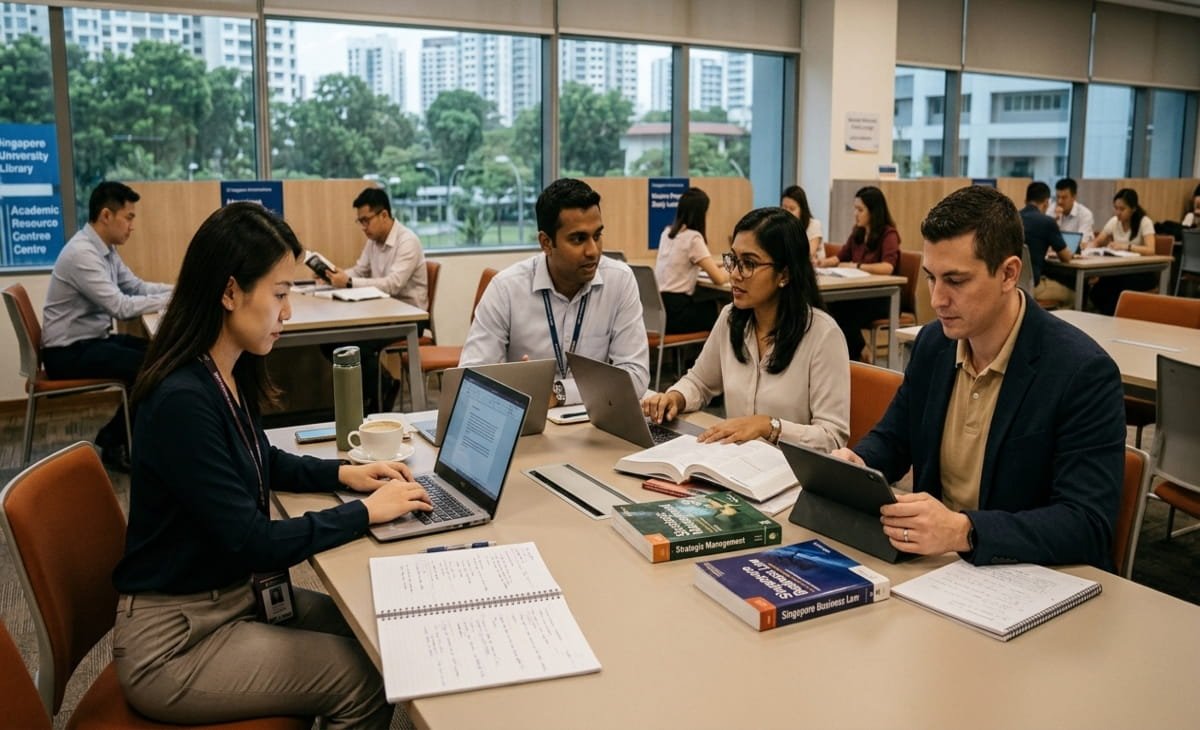
Building a successful career often requires more than professional experience. As industries introduce new technologies, management practices, and business models, employees may need additional qualifications to remain competitive. However, leaving a full-time job to pursue higher education isn’t always practical, especially for professionals managing financial and family responsibilities.
This is where part time masters Singapore programmes offer an alternative. They allow working adults to develop advanced knowledge, strengthen professional skills, and work towards postgraduate qualifications while maintaining their existing employment.
Singapore provides various postgraduate study opportunities across business, technology, finance, education, and other professional fields. Understanding how these programmes work can help prospective students make informed decisions about their academic and career development.
Why Working Professionals Consider Part-Time Master’s Degrees
Many professionals reach a stage where practical experience alone may not provide the specialised knowledge required for their next career move.
An employee working in operations, for example, might understand daily business processes but need stronger analytical and strategic planning skills to move into senior management. Similarly, someone working in marketing may want to develop expertise in digital technologies, consumer analytics, or international business.
Part-time postgraduate education creates an opportunity to address these knowledge gaps without taking an extended career break.
Another advantage is the ability to connect classroom learning with workplace responsibilities. Students can often relate academic concepts to challenges they encounter at work, making their studies more relevant to their professional development.
Popular Master’s Degree Specialisations in Singapore
Choosing the right postgraduate qualification depends on professional interests, existing qualifications, and future career plans.
Business Administration and Management
A Master of Business Administration is commonly considered by professionals interested in leadership, business strategy, organisational management, and entrepreneurship.
MBA programmes typically introduce students to subjects such as financial decision-making, marketing strategy, organisational behaviour, and business operations.
These areas can be useful for professionals preparing to manage teams, oversee projects, or take on broader organisational responsibilities.
Data Science and Artificial Intelligence
Businesses increasingly use data to understand customer behaviour, improve operations, and support strategic decisions.
Postgraduate programmes in data science and artificial intelligence may cover statistical analysis, machine learning, data interpretation, and practical technology applications.
Such qualifications can appeal to professionals working in technology, analytics, finance, and digitally focused industries.
Supply Chain and Logistics Management
Singapore’s position as an international trading and logistics centre makes supply chain knowledge relevant across several industries.
A master’s degree in this discipline may examine procurement, inventory planning, international logistics, operational efficiency, and supply chain risk management.
Professionals working in manufacturing, transportation, distribution, and procurement may find these subjects particularly relevant.
Education and Professional Development
Experienced educators may pursue postgraduate studies to strengthen their understanding of teaching practices, educational research, curriculum development, and academic leadership.
These programmes can support professional development for teachers, education administrators, and individuals interested in specialised educational roles.
How Part-Time Postgraduate Study Fits Around Employment
The main attraction of part-time education is the opportunity to continue working while studying.
However, flexible study does not necessarily mean a lighter academic workload. Students are still expected to complete assignments, participate in learning activities, and meet assessment requirements.
Depending on the institution and programme, teaching arrangements may include scheduled classroom sessions, evening lessons, weekend classes, or a combination of independent study and guided instruction.
Prospective students should confirm the actual timetable before enrolling rather than assuming every programme offers evening or weekend attendance.
Some institutions also provide accelerated postgraduate pathways. For example, Amity Global Institute lists selected master’s programmes with 12-month durations and both full-time and part-time study options.
Programme schedules and completion requirements should always be checked individually.
What to Consider Before Choosing a Master’s Programme
Selecting a postgraduate qualification requires more than comparing course titles.
Academic relevance: Review the modules carefully to determine whether they address the knowledge and skills needed for your intended career direction.
Awarding institution: Understand which university awards the qualification and how the programme is delivered. This is particularly relevant when studying through an institution that collaborates with an overseas university.
Entry requirements: Some master’s programmes accept graduates from different academic backgrounds, while others require relevant undergraduate qualifications or professional experience.
Total study costs: Consider tuition fees alongside registration charges, learning materials, transportation, and other possible expenses.
Assessment methods: Programmes may use examinations, coursework, presentations, research projects, or a combination of assessment formats.
Study duration: A shorter programme may appear attractive, but students should evaluate whether its weekly workload is manageable alongside employment.
Taking time to compare these factors can reduce the likelihood of choosing a course that conflicts with professional or personal commitments.
Exploring Postgraduate Education Options in Singapore
Singapore offers postgraduate pathways through universities and private education institutions working with international academic partners.
For example, Amity Global Institute provides master’s degree options in disciplines including business administration, international management, data science, artificial intelligence, education, and supply chain management.
Its postgraduate offerings include programmes associated with UK university partners, giving prospective students different academic specialisations to consider.
Professionals researching part time masters Singapore opportunities can compare available disciplines, awarding universities, study modes, and programme durations before deciding which qualification best matches their objectives.
Rather than selecting a programme solely because of its duration or popularity, applicants should examine how its curriculum relates to their current responsibilities and future ambitions.
Managing Work, Studies, and Personal Responsibilities
Returning to education after several years of employment can require adjustments.
Unlike full-time students, working professionals may need to complete academic tasks after office hours or during weekends.
Creating a realistic weekly schedule can make the transition easier.
Students can begin by identifying regular study periods and setting aside additional time for assignments or examinations. Breaking larger academic tasks into smaller activities can also help prevent last-minute pressure.
Communication with employers may be useful, particularly when assessment deadlines coincide with important workplace projects.
Family support can also make a difference. Discussing study commitments in advance helps establish reasonable expectations about personal time and responsibilities.
Most importantly, students should maintain a sustainable routine. Consistent progress is generally more manageable than relying on intensive study sessions immediately before deadlines.
Can a Part-Time Master’s Degree Improve Career Opportunities?
A postgraduate qualification can support professional development, but career outcomes depend on several factors.
Employers may value advanced subject knowledge, analytical abilities, research experience, and stronger management skills. However, a master’s degree does not automatically guarantee promotion, higher earnings, or a new position.
Its value often depends on how effectively graduates apply their learning.
For someone already working in a specialised field, postgraduate education may deepen existing expertise. For another professional, it may provide academic knowledge relevant to a different career direction.
The strongest approach is to identify a clear professional objective before choosing a programme.
A qualification connected to realistic career goals is more likely to provide meaningful long-term value than one selected without considering its practical applications.
Final Thoughts
Pursuing a master’s degree while working requires commitment, planning, and careful course selection. Yet it can provide an opportunity to develop specialised knowledge without putting an established career on hold.
Singapore offers postgraduate study choices across several professional disciplines, allowing individuals to explore qualifications aligned with their interests and career aspirations.
Before enrolling, prospective students should compare academic content, awarding institutions, entry requirements, fees, and teaching schedules.
With the right programme and a manageable study routine, part-time postgraduate education can become a valuable part of continued professional growth.
