


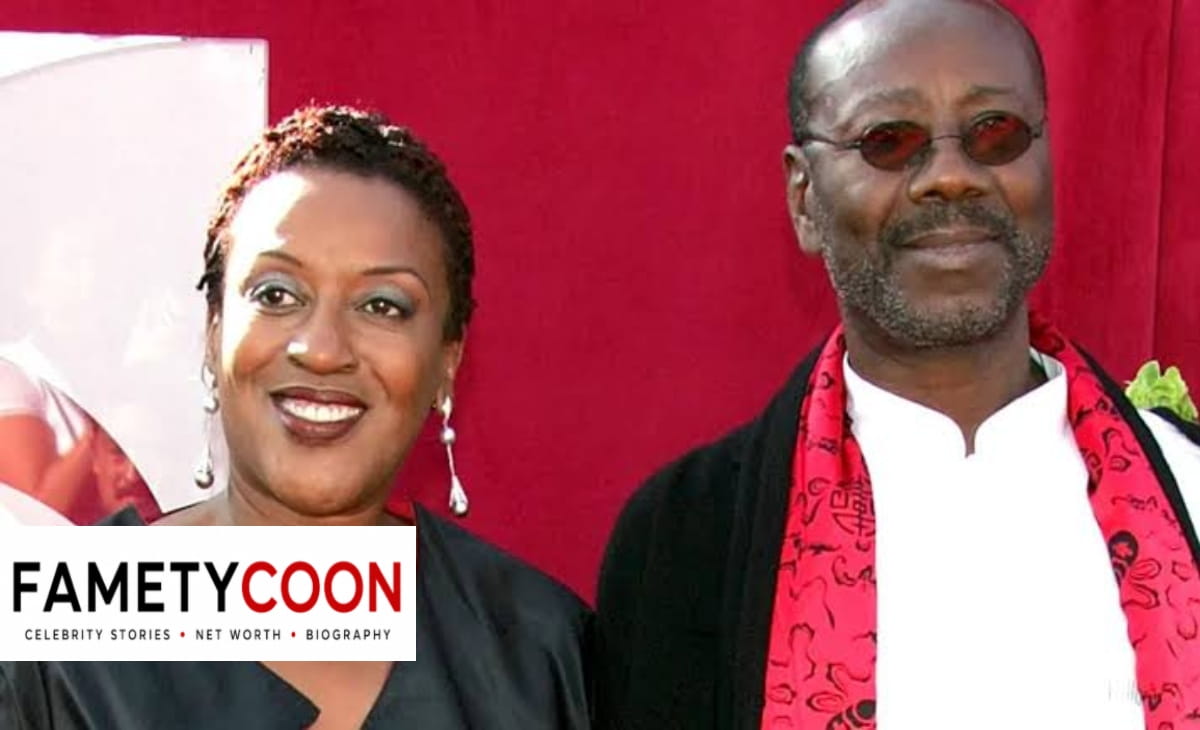
Boubacar Kone was a Senegalese journalist, art curator, and cultural philanthropist whose decades of work helped bring African and diaspora art to wider audiences across three continents. While many know him as the late husband of actress C.C.H. Pounder, his own career — culminating in the creation of a contemporary art museum in Dakar — stands as a legacy distinct from his marriage to a Hollywood star.
Quick Facts About Boubacar Kone
| Detail | Information |
| Full Name | Boubacar Kone |
| Date of Birth | October 25, 1942 |
| Place of Birth | Senegal |
| Date of Death | August 3, 2016 |
| Age at Death | 73 |
| Place of Death | Los Angeles, California |
| Nationality | Senegalese |
| Religion | Reportedly Islam |
| Education | Institute of International Journalism, Strasbourg, France |
| Profession | Journalist, curator, philanthropist, cultural worker |
| Known For | Museum work and marriage to C.C.H. Pounder |
| Wife | C.C.H. Pounder |
| Reported Marriage Year | 1970 |
| Children | Number and names unclear due to conflicting reports |
| Major Project | Musée Boribana, Dakar, Senegal |
| Other Project | Pounder-Kone Art Space, Los Angeles |
| Cause of Death | Reported as natural causes |
Who Was Boubacar Kone?
Boubacar Kone built a career spanning journalism, art curation, and cultural philanthropy, with a consistent focus on connecting African artists — both on the continent and across the diaspora — with wider audiences. Though widely introduced as C.C.H. Pounder’s husband, given her decades-long Hollywood career, Kone’s own professional path took him across Senegal, Canada, and the United States, largely working behind the scenes rather than in the public eye.
His most enduring achievement, Musée Boribana in Dakar, reflects a career built around the belief that art could bridge geography and culture — a mission he pursued alongside his wife for decades before eventually donating the museum to the Senegalese public.
His Early Life in Senegal
Boubacar Kone was born on October 25, 1942, in Senegal, growing up during a period of major political transformation as the country moved toward independence from France in 1960. Published profiles describe him as raised in a Muslim family, though reliable details about his parents, siblings, or childhood are sparse — he rarely discussed his early life publicly, with most available information instead centering on his later career.
Despite years spent studying and working abroad, Kone maintained a strong connection to Senegal throughout his life, a bond he later revisited through his cultural work and, ultimately, through the museum he built in Dakar with C.C.H. Pounder.
His Education
Kone reportedly studied at the Institute of International Journalism in Strasbourg, France, receiving formal training in journalism while also gaining exposure to an international environment that connected him with people and ideas from beyond West Africa. That foundation shaped much of his later career path — rather than remaining solely in journalism, he gradually moved into broader cultural work involving artists and cultural institutions.
His time studying outside Senegal also positioned him for the international career that followed, eventually working across Senegal, Canada, and the United States and helping link African artists with institutions and communities in other parts of the world.
How He Built His Career
Kone’s professional identity spanned journalism, curation, and cultural advocacy, with some sources also describing him as an anthropologist and philanthropist. Rather than seeking personal visibility, he tended to work in supporting roles — organizing, advising, and helping build spaces where art could be shown and discussed.
He was associated with cultural circles in Dakar, including work connected to Laboratoires, and has been linked to several major art events and institutions over the years. His career later expanded significantly through his work with C.C.H. Pounder, culminating in one of his most significant achievements: the creation of a contemporary art museum in Senegal. Time spent in North America also broadened his perspective, connecting him to a wider network of African and Caribbean art beyond the continent itself.
His Work With African Art and Culture
One report connects Kone to the Festival Mondial des Arts Nègres, held in Dakar in 1966 — a major cultural gathering of writers, musicians, and artists from Africa and its diaspora during the early years of Senegal’s independence. He later spent time in Canada, reportedly involved with the Agnes Etherington Art Centre at Queen’s University, and is credited with helping organize an African-Caribbean art festival in Montreal.
His cultural work also extended to art groups in Dakar, and he reportedly served as an adviser to the Afriki Gallery in Los Angeles — roles that collectively illustrate a career moving fluidly between journalism, curation, and support for creative communities. A recurring thread throughout was his interest in linking African artists with the wider diaspora, an idea that would later become the founding purpose behind Musée Boribana.
You May Also like this: Jason Carden: D’Arcy Carden’s Husband and His Career in Comedy Production
How He Met C.C.H. Pounder
C.C.H. Pounder, a Guyanese-born American actress, built a long career in television and film with roles in ER, The Shield, Warehouse 13, NCIS: New Orleans, and the Avatar films — a level of public visibility far beyond her husband’s. Public sources offer very few details about how exactly Kone and Pounder first met, and that part of their story appears to have remained private by choice.
What’s commonly reported is that the couple married in 1970, going on to build both a family life and a shared creative partnership. Despite the differences in their public profiles, they developed a deep mutual interest in contemporary art, particularly work tied to Africa and its diaspora — a passion that would eventually shape much of their life together.
Their Marriage
If the widely cited 1970 marriage date is accurate, Kone and Pounder were married for roughly 46 years, until his death in 2016 — a figure that contradicts occasional online claims of a shorter, 25-year marriage. Their relationship remained largely private despite Pounder’s Hollywood profile, with Kone typically appearing publicly only alongside her at events tied to their shared interests.
The couple was photographed together at notable events including the 49th Primetime Emmy Awards in 1997, the Hollywood premiere of End of Days in 1999, and the 57th Primetime Emmy Awards in 2005. Beyond red-carpet appearances, though, their relationship was anchored by shared work — collecting art, supporting artists, and eventually building physical spaces in both Senegal and Los Angeles dedicated to contemporary art.
His Family and Children
Details about Boubacar Kone’s children remain one of the more unresolved parts of his biography, with published sources offering conflicting accounts. One source lists three children — Nicole (born 1971), Libya (born 1973), and Matthew (born 1982) — and states that Kone later had six grandchildren. A separate account instead names five children — Cheik, Aisha, Awa, Noah, and Mariama — along with three grandchildren.
Given the discrepancy between these accounts, neither can be treated as fully confirmed without stronger documentation. What is clearer is that Kone and Pounder kept their family life largely outside media coverage, even as Pounder’s acting career brought significant public attention to the couple themselves.
The Story of Musée Boribana
Among Boubacar Kone’s most significant achievements was Musée Boribana, a contemporary art museum in Dakar, Senegal, created together with C.C.H. Pounder after years of shared interest in African art. Sources differ slightly on its origins — some point to around 1993 as the project’s beginning, while others cite 1997 as when the museum was formally established — suggesting the concept took shape in the early 1990s before fully developing into an institution.
The museum focused specifically on contemporary African art and work by diaspora artists, with Pounder later explaining that she and Kone wanted audiences in Africa to see what artists of African descent were creating elsewhere in the world. Beyond a personal collection, Musée Boribana functioned as a space for genuine cultural exchange, bringing together Kone’s lifelong interests in art, travel, and community-building.
Giving the Museum to Senegal
In 2014, Kone and Pounder made the significant decision to donate Musée Boribana to Senegal, transforming a personal project into a lasting public institution. The gift reflected Kone’s deep commitment to his home country’s cultural life, ensuring the museum’s future would extend well beyond the couple’s own involvement.
This donation aligned closely with Kone’s broader identity as a philanthropist — much of his career had centered on supporting artists and building spaces for cultural exchange, and giving away the museum stood as one of the clearest expressions of that commitment. Kone passed away roughly two years after the donation, leaving Musée Boribana as one of the most visible and enduring parts of his public legacy.
The Pounder-Kone Art Space in Los Angeles
Kone and Pounder also extended their cultural work to the United States, establishing the Pounder-Kone Art Space in Los Angeles as another venue supporting contemporary art. The project reflected their shared interest in art tied to Africa and its diaspora, and gave them a way to build connections between artists across different parts of the world.
For Kone, the Los Angeles space represented a natural continuation of a career that had already crossed borders through his work in Senegal and Canada — and it underscored just how deeply his professional life and his marriage were intertwined through their shared devotion to art.
His Death
Boubacar Kone died on August 3, 2016, in Los Angeles, California, at age 73, just months before what would have been his 74th birthday. One published report attributes his death to natural causes, though no more specific medical details have been confirmed publicly, and information about his burial location also remains unclear.
His death came only two years after he and Pounder had donated Musée Boribana to Senegal, meaning that gift stands as one of the final major achievements of a career spent connecting art, culture, and community across continents.
How C.C.H. Pounder Remembered Him
C.C.H. Pounder has continued to honor her husband’s memory publicly in the years since his passing. On the first anniversary of his death, she shared that prayers were offered and a feast prepared in his honor — a gesture reflecting how deeply his memory remained with family and loved ones.
In October 2023, on what would have been Kone’s 81st birthday, Pounder shared an older photograph of him on Instagram along with a personal message — a rare public glimpse into the private side of a marriage that had largely stayed out of the spotlight during Kone’s lifetime. Pounder has also continued her own involvement in art collecting and support, carrying forward part of the creative partnership she and Kone built together.
Final Thoughts
Boubacar Kone’s story extends well beyond his identity as C.C.H. Pounder’s husband. As a journalist, curator, and philanthropist, he spent decades helping connect African and diaspora artists across Senegal, Canada, and the United States, culminating in the creation and eventual public donation of Musée Boribana in Dakar. While parts of his personal life — particularly the makeup of his family — remain unclear due to conflicting public accounts, his cultural legacy is unmistakable: a career devoted to giving artists and audiences alike a place to meet, connect, and be remembered.
FAQs About Boubacar Kone
Who was Boubacar Kone?
He was a Senegalese journalist, curator, philanthropist, and cultural figure, also known as the late husband of actress C.C.H. Pounder.
What was Boubacar Kone’s cause of death?
One report cites natural causes, though a more specific medical cause hasn’t been publicly confirmed.
Was Boubacar Kone married to C.C.H. Pounder?
Yes. They reportedly married in 1970 and remained together until his death in 2016.
What was Musée Boribana?
A contemporary art museum in Dakar, Senegal, created by Kone and Pounder to showcase African and diaspora art, later donated to Senegal in 2014.
How many children did Boubacar Kone have?
Published sources disagree — one lists three children, another lists five different names — so the exact number and names remain unconfirmed.
