


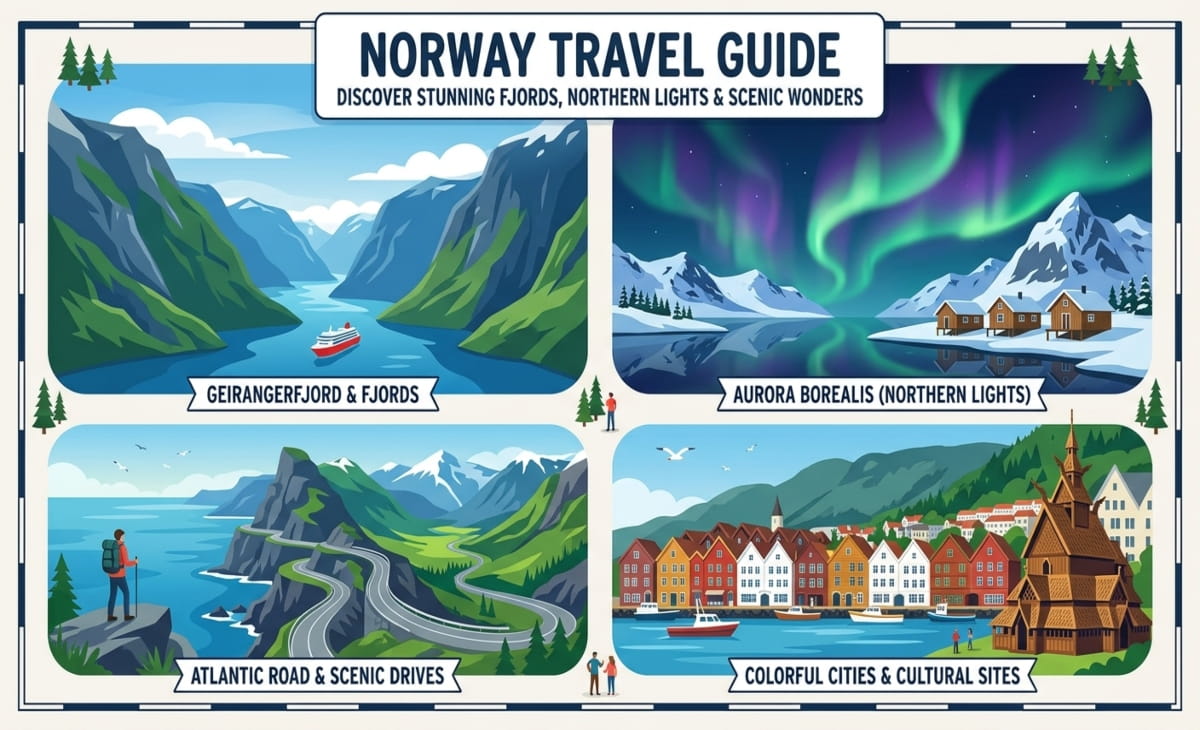
Nerwey is an unusual search term that many people use when they are trying to find information about Norway. The spelling may result from pronunciation, fast typing, or a simple keyboard mistake. Despite the different spelling, the intended destination is often clear: the Nordic country famous for its dramatic fjords, snowy mountains, peaceful cities, and exceptionally long summer days.
Norway attracts travellers with its natural beauty, scenic railway journeys, coastal villages, and opportunities to see the northern lights. Beyond tourism, the country is also known for hydropower, electric transportation, and modern agricultural technology.
This guide explains what Nerwey means and explores Norway’s geography, popular destinations, travel seasons, fjords, railway experiences, renewable energy, and digital farming. It also offers practical advice for planning a trip and understanding what makes Norway more than just a beautiful holiday destination.
What Does Nerwey Mean?
Nerwey is not the official name of a recognized country, city, or region. In most online searches, it appears to be a spelling variation of Norway, the Northern European country known for its mountains, fjords, forests, and coastal scenery.
Search engines may interpret the term as a request for information about Norway and display results related to travel, culture, maps, accommodation, and weather. Some websites may also use the spelling in article titles to attract people who accidentally type the wrong word.
The spelling does not give Nerwey a separate geographical or legal meaning. It is best understood as an informal search phrase that usually points towards Norway and information about the country.
Why People Type It
English spelling does not always reflect how a word sounds when spoken. Someone who hears the name Norway may type Nerwey because the alternative spelling seems natural to them.
Mobile keyboards, autocorrect tools, speech-to-text software, and typing quickly can also produce unusual variations. Search engines are often capable of interpreting these mistakes and presenting results for the intended word.
For anyone planning a trip, using the correct spelling, Norway, is important when searching for official tourism information, booking flights, checking visa requirements, or purchasing railway tickets.
Norway at a Glance
Norway is located in Northern Europe and forms part of Scandinavia. It shares a long land border with Sweden and also borders Finland and Russia in the far north. Oslo is the country’s capital and largest city.
The country has a long, relatively narrow shape, with a coastline marked by islands, bays, and steep sea inlets. Much of its landscape consists of mountains, forests, lakes, and high plateaus. These geographical features influence transportation, settlement, farming, and tourism.
Travelling between two places that look close on a map can take longer than expected because of mountains, waterways, tunnels, ferry crossings, and seasonal road conditions. Planning a realistic route is therefore essential.
For people searching for Nerwey, understanding Norway’s geography helps explain why trains, ferries, bridges, and tunnels play such an important role in getting around the country.
Why Travellers Choose Bergen and Western Norway
Norway offers impressive scenery without requiring every visitor to stay in a large resort. Travellers can explore a historic harbour in the morning, travel alongside a fjord in the afternoon, and reach a mountain village later in the day.
Bergen is one of the most popular starting points for exploring western Norway. Located between mountains and the sea, the city combines waterfront scenery with a compact urban centre. Its attractions include the historic Bryggen harbour area, the fish market, mountain viewpoints, and the Fløibanen funicular.
Rain is common in Bergen, so a waterproof jacket is useful even during summer. Visitors should also allow time to explore the city itself rather than treating it only as a transport hub.
Bergen provides access to journeys towards Voss, Myrdal, Flåm, Sognefjord, Hardangerfjord, and Nærøyfjord. Local buses and light rail also help visitors move around the city.
For many travellers searching for Nerwey, Bergen is an appealing choice because it combines city experiences with convenient access to some of Norway’s most famous natural landscapes.
The Flåm Railway Experience
The Flåm Railway connects the village of Flåm, beside Aurlandsfjord, with Myrdal, a mountain railway station connected to Norway’s wider rail network. The journey is known for its steep gradients, waterfalls, green valleys, mountain scenery, and tunnels.
The railway offers a different perspective on Norway’s landscape. Rather than simply transporting passengers between destinations, it allows them to experience the changing scenery as the train climbs away from the fjord and into the mountains.
Many travellers combine the journey with the Bergen Railway or a boat trip through Nærøyfjord. The Flåm Railway is also associated with the popular Norway in a Nutshell travel route between Oslo and Bergen.
A trip connected with Nerwey should not treat this railway journey as merely a quick transfer. The views are a major part of the experience. Travellers should check seasonal conditions and book ahead during busy periods. Snow-covered mountains, green valleys, autumn colours, and mist can create very different experiences throughout the year.
Fjords and the Western Coast
A fjord is a long, narrow sea inlet bordered by steep land. Many Norwegian fjords were shaped by glaciers over long periods, creating deep waterways surrounded by mountains and cliffs.
Today, fjords are important to Norway’s tourism, transport, fishing, farming, and coastal communities. Ferries and passenger boats connect settlements, while scenic routes provide access to viewpoints, villages, and hiking areas.
Sognefjord is Norway’s longest and deepest fjord and is often promoted as the country’s most impressive fjord system. Nærøyfjord is particularly well known for its narrow waterway and dramatic mountain scenery. Hardangerfjord attracts visitors with fruit-growing areas, waterfalls, and access to mountain landscapes.
Travellers searching for Nerwey may be looking for quiet or less crowded fjord destinations. However, a place described online as hidden or remote can still require careful transport planning. Ferry timetables, accommodation availability, road conditions, and seasonal services should be checked before setting out.
Best Time to Visit Norway
There is no single best month for visiting Norway. The right time depends on whether the main goal is hiking, exploring cities, experiencing fjords, skiing, enjoying railway journeys, or seeing the northern lights.
Summer
June through August is a popular period for visiting Norway. Long daylight hours make it easier to explore cities, hike mountain trails, visit fjords, and take scenic rail or boat trips.
Many seasonal transport services and tourist attractions operate more frequently during summer. However, this is also one of the busiest travel periods, so accommodation and popular excursions can be more expensive.
Autumn
September and October bring cooler temperatures, changing foliage, and fewer visitors in many destinations after the summer peak.
Autumn can be attractive for travellers who prefer quieter surroundings and colourful landscapes. However, some tours, ferry routes, and seasonal attractions may reduce their operating schedules as winter approaches.
Winter
Winter is suitable for snow activities, skiing, winter city breaks, and northern lights trips. Northern Norway is especially popular among travellers hoping to see the aurora borealis.
Visitors should prepare for cold temperatures, short daylight hours in northern regions, and potentially difficult road conditions. Appropriate clothing and flexible travel plans are important.
Spring
April and May can bring melting snow, powerful waterfalls, emerging greenery, and fewer visitors than the main summer season.
Conditions vary considerably across the country. Some mountain paths may remain snowy, wet, or closed, and certain transport or tourist services may not yet be operating on their summer schedules.
A useful Nerwey travel plan begins with one main objective. Decide whether fjords, cities, hiking, railway journeys, or the northern lights matter most, then choose the season and region accordingly.
Where to See the Northern Lights
The northern lights, also called the aurora borealis, are among Norway’s most famous natural attractions. They are commonly associated with northern destinations such as Tromsø, Alta, Senja, and the Lofoten Islands.
The main viewing season generally extends from autumn into early spring, when dark skies provide opportunities to observe the aurora. However, visibility depends on several factors, including cloud cover, darkness, solar activity, and local light pollution.
Tromsø is a popular base because it offers accommodation, transport connections, guided excursions, and access to surrounding areas. Other northern destinations may appeal to visitors seeking quieter surroundings or different landscapes.
Travellers should ideally stay for several nights rather than relying on a single evening. Even when aurora activity is promising, thick clouds can prevent anyone from seeing the lights.
No tour operator or travel guide can guarantee a display. People searching for Nerwey northern lights trips should compare weather forecasts, transport arrangements, warm clothing requirements, and backup plans instead of choosing solely on price.
Clean Energy and Hydropower
Norway is widely known for its use of hydropower to generate electricity. Its mountains, rivers, lakes, and substantial rainfall support a large hydroelectric system that plays a central role in the country’s energy supply.
Hydropower provides a major share of Norwegian electricity and supports homes, industry, transport, and other economic activities. It also helps explain the country’s widespread adoption of electric vehicles and the development of electric ferries and other transport solutions.
However, Norway’s energy picture is more complex than a simple green reputation might suggest. The country is also a major exporter of oil and natural gas, creating a contrast between its relatively low-emission electricity system and its role in global fossil-fuel markets.
This distinction matters when discussing sustainability. A balanced Nerwey article should recognize Norway’s progress in renewable electricity while also acknowledging the environmental and economic questions associated with its oil and gas industry.
Digital Farming in Norway
Norwegian agriculture operates under challenging conditions. Cold weather, short growing seasons, steep terrain, and relatively high labour costs can make farming more difficult than in regions with warmer climates and larger areas of flat land.
Digital technology can help farmers use resources more efficiently. Tools such as field sensors, precision farming systems, automated equipment, and data-based planning can improve decisions about seeds, fertilisers, fuel, and other inputs.
The Norwegian Institute of Bioeconomy Research works on areas including precision agriculture, digital services, sensors, automation, and data-driven farming practices. These technologies can help farmers understand field conditions and potentially reduce unnecessary resource use.
Other developments include drones, remote sensing, and virtual fencing for livestock grazing. Such tools can help farmers monitor land and animals, although they do not eliminate the need for agricultural knowledge and practical experience.
This aspect of Nerwey content is important because Norway is more than a destination for scenic holidays. It is also a country exploring practical ways to improve food production, energy systems, and rural work through technology.
How to Plan a Smarter Norway Trip
Planning a trip to Norway requires attention to distances, transport schedules, weather, and seasonal availability. Although the country may look compact on a screen, mountains and fjords can make travel slower than expected.
Avoid trying to fit Oslo, Bergen, Flåm, Lofoten, and Tromsø into a short trip. These destinations are spread across a large area, and visiting all of them can involve long journeys and unnecessary expense.
Book important transport and accommodation early. Scenic railway journeys, cabins, ferry connections, and hotels in popular northern destinations may become difficult to secure during busy periods.
Pack layers rather than relying on one heavy coat. Weather can change quickly, so a waterproof outer layer, comfortable walking shoes, and a small day bag are useful for many itineraries.
Do not use Nerwey as the destination name when making official bookings. Use Norway for flights, visa information, railway reservations, and official travel guidance. Check the season as well, because some ferries, roads, hiking routes, and guided excursions operate less frequently outside summer.
For a first visit, travelling between Oslo and Bergen by rail can provide a manageable introduction to the country. Adding Flåm offers an opportunity to experience fjord scenery, while northern Norway is a better starting point for a trip focused on the aurora.
Norway Beyond the Famous Views
Norway’s appeal extends beyond the landscapes that dominate travel photographs. Public transport, coastal communities, remote farms, renewable electricity, and changing weather all influence everyday life.
Visitors should also consider the practical limitations of remote locations. Some scenic areas may have limited parking, public toilets, mobile reception, shops, or emergency services. A place described online as a secret destination may require more preparation than a popular tourist attraction.
Responsible travel means respecting local communities, following marked routes, checking access restrictions, and understanding how weather can affect outdoor activities. Travellers should use official tourism information and local transport websites when planning visits to unfamiliar areas.
The best Nerwey content offers a balanced picture of Norway. Its beauty is a major attraction, but costs, distances, weather, transport arrangements, and responsible travel choices are equally important when planning a successful trip.
Bottom Line
Nerwey is best understood as an informal search spelling for Norway rather than the official name of a separate destination. Behind this small spelling variation is a country known for spectacular fjords, mountain railways, northern lights, modern cities, hydropower, and agricultural technology.
A successful Norwegian trip does not need to cover the entire country. Choose a region, allow enough time for weather and transport, and build a realistic itinerary around your interests.
Whether the goal is exploring Bergen, riding the Flåm Railway, cruising along a western fjord, seeing the northern lights, or learning about Norway’s energy systems, thoughtful planning can make the experience more rewarding.
